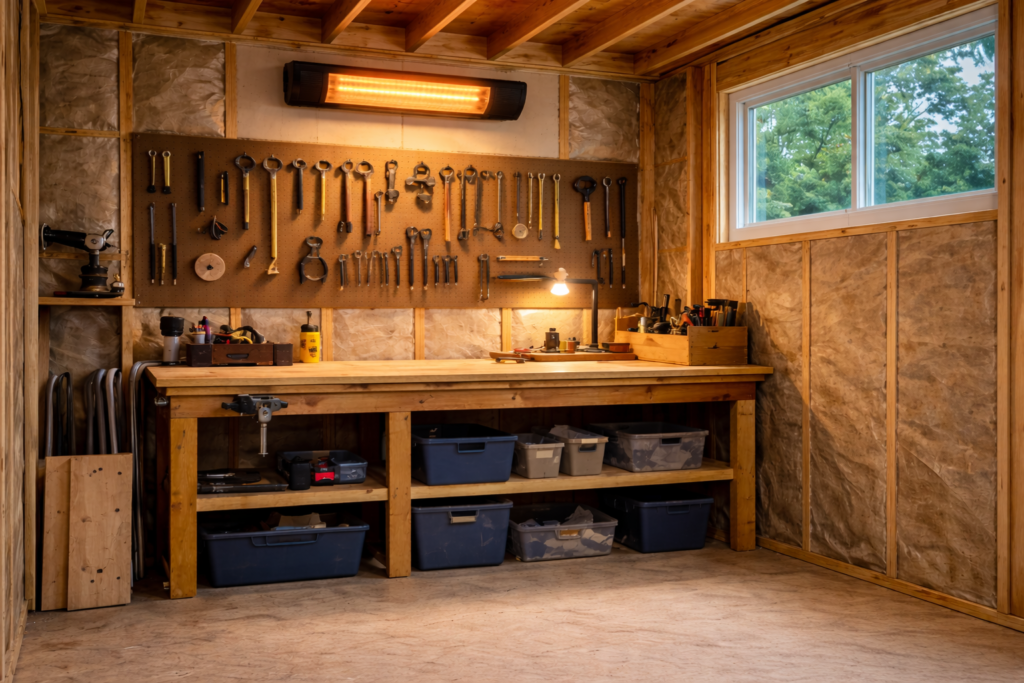
Wall-mounted electric heaters are one of the most practical ways to heat a shed. They save floor space, provide steady airflow, and offer a permanent heating solution for workshops and hobby spaces.
This guide explains when a wall-mounted heater makes sense and what to look for before choosing one.
Why Choose a Wall Mounted Heater?
Wall-mounted heaters are ideal for sheds because they:
-
Keep the floor clear
-
Provide directed airflow
-
Offer consistent heat distribution
-
Are safer around tools and stored materials
-
Work well as a permanent setup
They are especially useful in sheds used as workshops or daily workspaces.
For general sizing guidance, see What Size Electric Heater Do I Need for a Shed?
When a Wall Heater Is the Best Option
A wall-mounted heater works well if:
-
Your shed is between 100–250 sq ft
-
You want a fixed heating solution
-
You have limited floor space
-
You plan to heat the shed regularly
For very small sheds under 100 sq ft, a compact unit may be sufficient. See Best Electric Heater for a Small Shed (Under 100 sq ft) for alternatives.
120V vs 240V Wall Heaters
Voltage affects heating power.
120V wall heaters
-
Plug into a standard outlet
-
Typically up to 1,500 watts
-
Suitable for small sheds
240V wall heaters
-
Require a dedicated circuit
-
Provide 2,000–5,000+ watts
-
Better for medium to large sheds
If your shed is larger than 150 sq ft, 240V is often the better choice.
You can compare options in:
How Much Wattage Do You Need?
Use this general rule:
Insulated shed
10 watts per square foot
Uninsulated shed
12–15 watts per square foot
For example:
150 sq ft insulated shed
150 × 10 = 1,500 watts
150 sq ft uninsulated shed
150 × 12–15 = 1,800–2,250 watts
For more detail, see How Many Watts to Heat a Shed?
Installation Considerations
Before installing a wall-mounted heater, check:
-
Electrical capacity
-
Proper mounting height
-
Clearance from combustibles
-
Wall stud support
-
Thermostat location
If you are unsure about wiring requirements, review Do You Need a Dedicated Circuit for a Shed Heater?
Professional installation is often recommended for 240V hardwired units.
Safety Features to Look For
In a shed environment, safety matters.
Look for:
-
Overheat protection
-
Enclosed heating elements
-
Built-in thermostat
-
Adjustable airflow direction
Avoid placing heaters directly near stored wood, fuel, or flammable materials.
For additional safety guidance, see Is It Safe to Run an Electric Heater in a Shed?
Wall Heater vs Ceiling Heater
Wall heaters direct airflow horizontally. Ceiling heaters distribute heat from above.
Ceiling models can work well in sheds with limited wall space. See Best Ceiling Mounted Electric Heater for a Shed for comparison.
Final Thoughts
A wall-mounted electric heater is often the best choice for:
-
Permanent shed workshops
-
Medium-sized insulated sheds
-
Regular winter use
-
Spaces where floor area needs to remain clear
Choose the correct wattage, match voltage to shed size, and ensure safe installation.
For a broader overview of all heater types, return to Best Electric Heater for a Shed (Complete Buyer Guide).