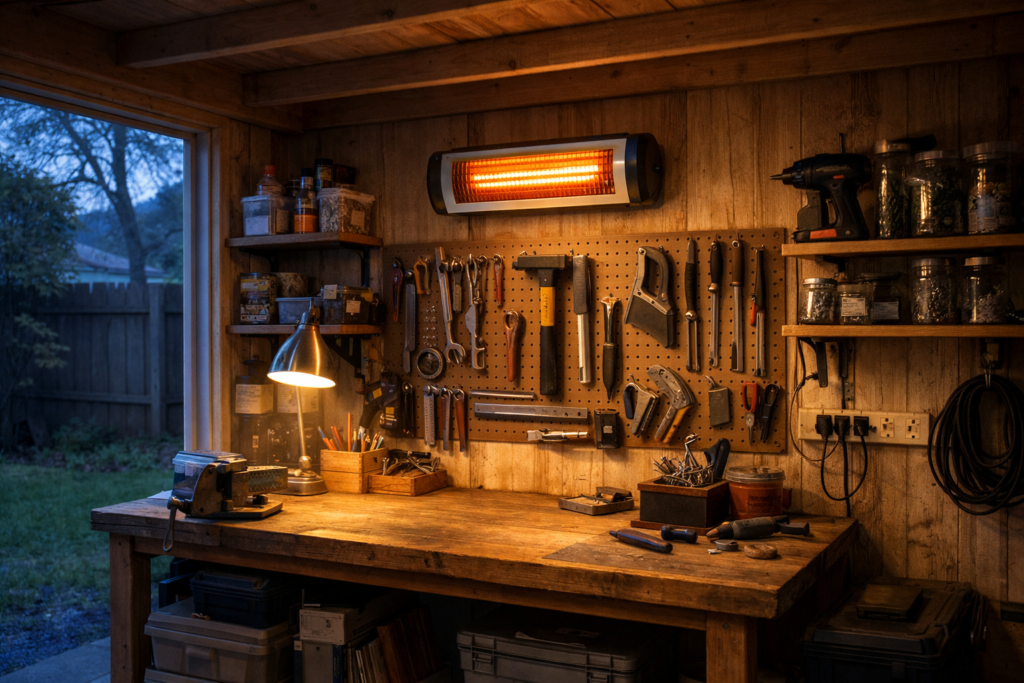
Stay Comfortable in Your Shed All Year
A cold shed can make simple jobs uncomfortable and shorten the time you’re willing to spend working, building, or organising. The right electric heater can turn a chilly space into a practical, usable workspace — even during the coldest months.
Electric Shed Heater Guide helps you choose safe, efficient heating solutions designed specifically for small sheds, garden workshops, hobby spaces, and backyard work areas.
Whether your shed is insulated or not, powered by a standard outlet or a dedicated circuit, this site explains what works, what doesn’t, and how to heat your space without wasting energy or creating safety risks
Start Here
If you’re not sure which heater is right for your shed, these guides will help you decide:
These articles cover the key decisions most shed owners need to make before choosing a heater.
Choosing the Right Shed Heater
Sheds heat differently than garages or indoor rooms. They are usually smaller, may have little insulation, and often lose heat quickly through thin walls, doors, or roofs.
When selecting a heater, the most important factors are:
-
Shed size and ceiling height
-
Insulation level
-
Available power (standard outlet or hardwired supply)
-
How long you plan to run the heater
-
Safety clearance and mounting options
Our guides focus on practical, real-world setups so you can choose a heater that works reliably without overloading circuits or increasing running costs.
Popular Shed Heating Options
Most sheds are heated using one of three electric heater types:
Portable heaters
Best for small sheds or occasional use. Easy to move and plug into a standard outlet.
Wall-mounted heaters
A good option for regular use. They save floor space and provide consistent heat.
Ceiling-mounted heaters
Ideal for tight spaces or workshops where floor and wall space is limited.
Each option has advantages depending on your shed size, layout, and power availability.
Energy Efficiency and Running Costs
Because sheds often lose heat quickly, choosing the right wattage and improving insulation can make a big difference.
Our efficiency guides explain:
-
How to match heater size to your shed
-
Ways to reduce heat loss
-
When insulation upgrades are worth it
-
How to estimate electricity costs
This helps you stay warm without running a heater longer than necessary.
Safety Matters in Small Spaces
Electric heaters are generally safe for sheds, but only when installed and used correctly.
Important considerations include:
-
Proper clearance from walls and stored items
-
Avoiding extension cords for high-wattage heaters
-
Circuit capacity and load limits
-
Moisture protection for outdoor structures
Our safety articles walk through these issues so you can heat your shed with confidence.
Latest Guides
Browse all shed heating articles to find solutions for your specific setup:
[Browse All Electric Shed Heater Guides]
Who This Site Is For
Electric Shed Heater Guide is designed for:
-
Garden shed owners
-
Backyard workshop users
-
Hobbyists and DIYers
-
Small tool or storage shed users
-
Anyone who wants a warmer, more usable shed in winter
The focus is practical advice, clear explanations, and realistic heating solutions for small outdoor workspaces.