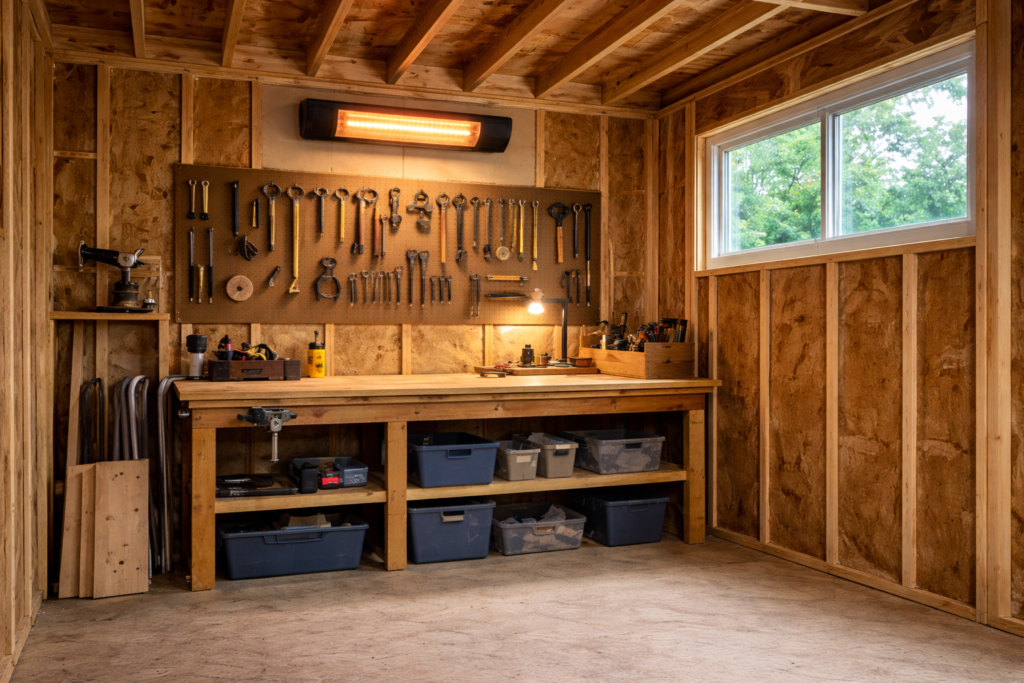
Heating an uninsulated shed is more challenging than heating an insulated one. Heat escapes quickly through walls, the roof, and the floor. That means the heater must work harder to maintain a comfortable temperature.
This guide explains what type of electric heater works best in an uninsulated shed and how to choose the right capacity.
Why Uninsulated Sheds Are Harder to Heat
Without insulation, a shed loses heat through:
-
Thin timber or metal walls
-
Gaps around doors
-
Roof panels
-
Concrete floors
-
Drafty windows
Because of this heat loss, standard wattage formulas need to be adjusted upward.
If you have not calculated wattage yet, review How Many Watts to Heat a Shed?
Increase Wattage for Heat Loss
For uninsulated sheds, use:
12–15 watts per square foot
Example:
100 sq ft shed
100 × 12–15 = 1,200–1,500 watts
192 sq ft shed
192 × 12–15 = 2,300–2,880 watts
Choosing the higher end of the range helps maintain stable temperatures.
For a full reference chart, see Electric Heater Size Chart for Sheds by Square Footage.
Best Heater Types for Uninsulated Sheds
Certain heater styles perform better in spaces with heat loss.
240V Wall-Mounted Heaters
These are often the most practical solution for medium and larger sheds.
Advantages:
-
Higher heat output
-
Stronger airflow
-
Faster warm-up times
-
Permanent installation
They are well suited to workshop-style sheds.
See Best 240V Electric Heater for a Shed for options.
Ceiling-Mounted Heaters
Ceiling heaters distribute heat more evenly across the space. In uninsulated sheds, this can help reduce cold zones.
They also:
-
Stay out of the way
-
Provide strong air circulation
-
Work well in sheds with equipment
See Best Ceiling Mounted Electric Heater for a Shed.
Portable Heaters (Small Sheds Only)
Portable heaters may work in very small uninsulated sheds under 100 sq ft, especially for occasional use.
However, they often struggle in larger spaces and may run continuously.
See Best Portable Electric Heater for a Shed if your shed is small.
120V vs 240V in Uninsulated Sheds
120V heaters typically max out at 1,500 watts. In an uninsulated shed over 120–150 sq ft, this may not be sufficient.
240V heaters:
-
Provide higher wattage
-
Heat faster
-
Maintain temperature better
If you are unsure about wiring requirements, review Do You Need a Dedicated Circuit for a Shed Heater?
Improving Heating Performance
Even basic upgrades can reduce heat loss and improve heater performance.
Consider:
-
Sealing door gaps
-
Adding basic wall insulation
-
Installing a vapor barrier
-
Using weather stripping
-
Insulating the roof
Improving insulation often reduces heater size requirements and operating cost.
For cost considerations, see How Much Does It Cost to Run an Electric Shed Heater?
Safety in Uninsulated Sheds
Uninsulated sheds often contain exposed wood framing and stored materials.
Choose heaters with:
-
Overheat protection
-
Enclosed heating elements
-
Built-in thermostat
-
Proper mounting clearance
For safe setup guidance, read Is It Safe to Run an Electric Heater in a Shed?
Final Thoughts
The best electric heater for an uninsulated shed is usually:
-
Higher wattage
-
Preferably 240V for medium or large sheds
-
Wall or ceiling mounted for consistent airflow
Portable heaters can work for very small spaces, but larger uninsulated sheds benefit from more powerful, permanently installed units.
If you are still deciding, return to Best Electric Heater for a Shed (Complete Buyer Guide) for a complete overview.