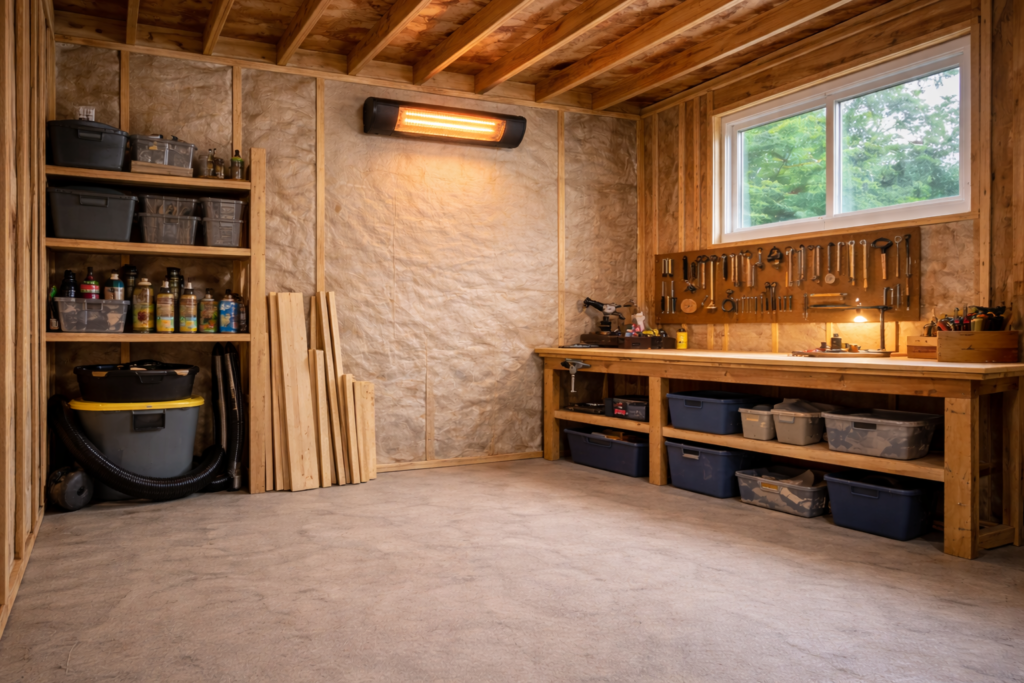
Electric heaters are one of the safest ways to heat a shed, but only when they are sized correctly and installed properly.
This guide explains the main safety considerations and how to reduce risk when heating a shed.
Why Electric Heaters Are Generally Safe
Compared to propane or kerosene heaters, electric models:
-
Produce no open flame
-
Do not emit carbon monoxide
-
Require no ventilation
-
Do not store fuel inside the shed
For most residential sheds, electric heating is the safest option when used correctly.
If you are still choosing a heater type, see Best Electric Heater for a Shed (Complete Buyer Guide).
Common Safety Risks in Sheds
Sheds often contain:
-
Sawdust
-
Wood
-
Paint or fuel containers
-
Cardboard boxes
-
Stored tools
These materials increase fire risk if heaters are poorly positioned or overloaded electrically.
Maintain Proper Clearance
Every heater has manufacturer clearance guidelines.
As a general rule:
-
Keep heaters away from stored materials
-
Do not block airflow
-
Avoid placing portable heaters under benches
-
Do not mount wall heaters directly against insulation
Ceiling-mounted or wall-mounted units often reduce accidental contact.
See Best Wall Mounted Electric Heater for a Shed if you want a fixed installation.
Electrical Safety
Electrical overload is one of the most common hazards.
To reduce risk:
-
Avoid extension cords
-
Do not share circuits with heavy tools
-
Confirm breaker capacity
-
Use a dedicated circuit when required
If you are unsure about wiring, review Do You Need a Dedicated Circuit for a Shed Heater?
Overheat Protection and Safety Features
Choose heaters with:
-
Overheat shutoff
-
Enclosed heating elements
-
Tip-over protection (portable models)
-
Thermostat control
These features reduce the risk of overheating and unattended operation.
Insulation and Ventilation
An uninsulated shed does not make electric heaters unsafe, but it can cause them to run continuously.
This increases:
-
Energy use
-
Electrical strain
-
Component wear
If your shed lacks insulation, see Best Electric Heater for an Uninsulated Shed.
Safe Placement Tips
For portable heaters:
-
Place on stable, non-flammable surfaces
-
Keep away from moisture
-
Do not run cords under rugs or mats
For wall or ceiling heaters:
-
Secure to studs or proper mounting brackets
-
Maintain recommended height
-
Keep clear of flammable storage
Final Thoughts
Yes, it is generally safe to run an electric heater in a shed if:
-
The heater is properly sized
-
Electrical capacity is sufficient
-
Clearances are respected
-
Safety features are present
Avoid makeshift setups, overloaded circuits, and blocked airflow.
For proper sizing guidance, see What Size Electric Heater Do I Need for a Shed?