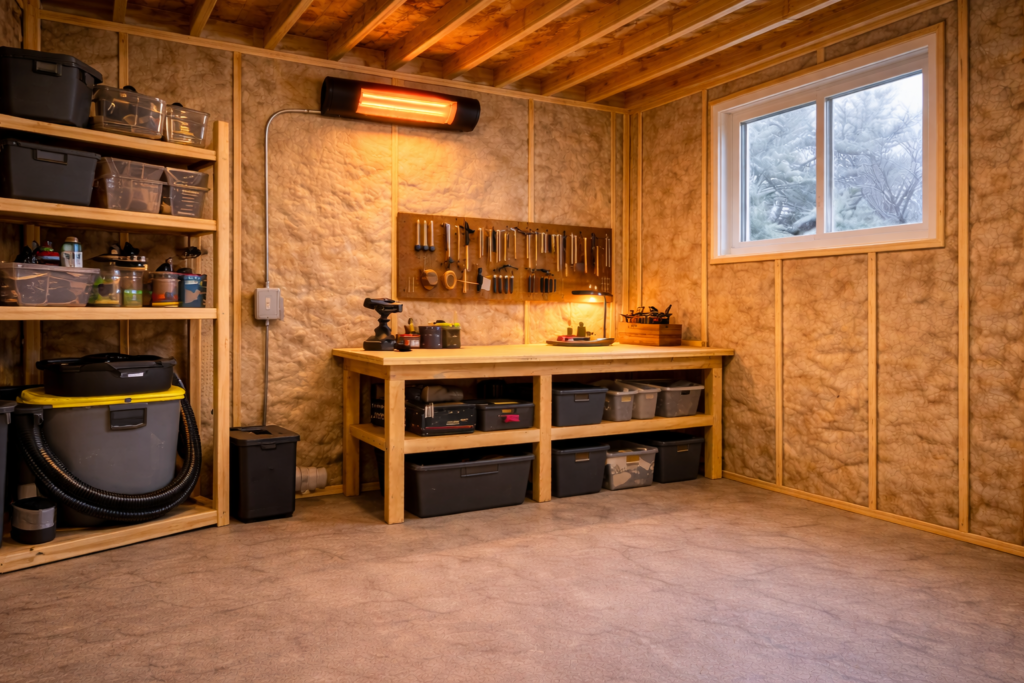
Heating a shed in winter requires more than simply plugging in a heater. Cold temperatures, insulation level, and shed size all affect how well the space stays warm.
This guide explains the best electric options for heating a shed during winter and how to choose the right setup.
Step 1: Calculate the Correct Heater Size
Before choosing a heater, determine how much heat your shed needs.
Use this general rule:
Insulated shed
10 watts per square foot
Uninsulated shed
12–15 watts per square foot
For example:
150 sq ft insulated shed
150 × 10 = 1,500 watts
For a detailed breakdown, see How Many Watts to Heat a Shed?
Correct sizing is the foundation of winter heating.
Step 2: Choose the Right Type of Electric Heater
Electric heaters are the safest and most practical winter option for residential sheds.
Wall-Mounted Heaters
Wall-mounted units are ideal for winter use because they:
-
Provide consistent airflow
-
Keep floor space clear
-
Offer secure installation
See Best Wall Mounted Electric Heater for a Shed
Ceiling-Mounted Heaters
Ceiling heaters distribute heat downward and work well in medium to large sheds.
See Best Ceiling Mounted Electric Heater for a Shed
Portable Electric Heaters
Portable units are suitable for small sheds and occasional winter use.
See Best Portable Electric Heater for a Shed
Step 3: Consider 120V vs 240V
Winter temperatures may require higher output.
120V heaters:
-
Suitable for small insulated sheds
-
Max out at around 1,500 watts
240V heaters:
-
Provide 2,000–5,000+ watts
-
Heat faster
-
Maintain stable temperatures in colder climates
See Best 240V Electric Heater for a Shed
Step 4: Improve Insulation for Better Winter Performance
Heating efficiency improves significantly with insulation.
Winter preparation may include:
-
Sealing door gaps
-
Adding wall insulation
-
Insulating the roof
-
Installing weather stripping
An insulated shed requires less runtime and lower energy use.
If your shed lacks insulation, review Best Electric Heater for an Uninsulated Shed
Step 5: Prioritise Safety in Winter
During winter, heaters may run for longer periods.
To stay safe:
-
Avoid extension cords
-
Maintain proper clearance
-
Use thermostat control
-
Ensure electrical capacity is sufficient
For safety guidance, see Is It Safe to Run an Electric Heater in a Shed?
Final Thoughts
Heating a shed in winter with electric options is effective when:
-
The heater is correctly sized
-
Voltage matches the shed’s needs
-
Insulation reduces heat loss
-
Electrical setup is safe
Electric heating provides consistent warmth without open flames or ventilation requirements.
For a complete overview of shed heater types and sizing guidance, see Best Electric Heater for a Shed (Complete Buyer Guide)