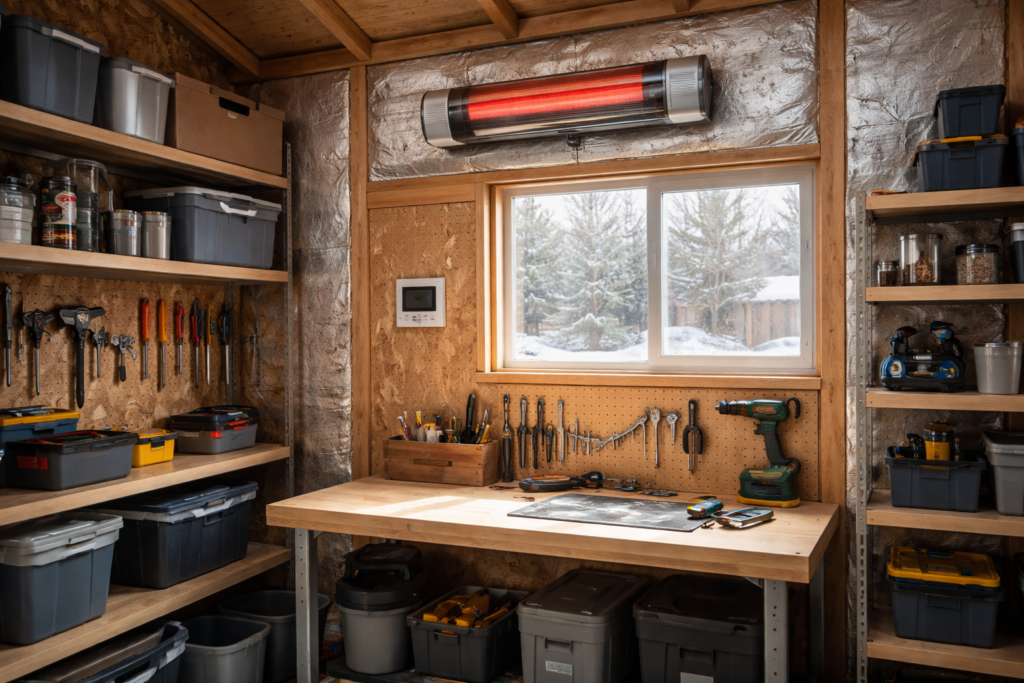
A thermostat plays a major role in how efficiently and comfortably your shed stays warm. The right thermostat prevents overheating, reduces energy use, and keeps temperatures stable during colder months.
This guide explains the best thermostat options for shed heaters and how to choose the right one.
Why a Thermostat Matters in a Shed
Without a thermostat, a heater may:
-
Run continuously
-
Overheat the space
-
Waste electricity
-
Increase wear on internal components
With a thermostat, the heater:
-
Cycles on and off automatically
-
Maintains consistent temperature
-
Reduces energy use
-
Improves safety
If you have not sized your heater yet, see How Many Watts to Heat a Shed?
Built-In Thermostats
Many wall-mounted and 240V heaters include integrated thermostats.
These are:
-
Simple to use
-
Installed directly on the heater
-
Adjustable manually
Built-in thermostats are ideal for small to medium sheds.
For wall-mounted heater options, see Best Wall Mounted Electric Heater for a Shed
External Wall Thermostats
Larger sheds and hardwired heaters often use separate wall-mounted thermostats.
Advantages include:
-
More accurate temperature sensing
-
Adjustable placement away from heat source
-
Better control in larger spaces
These are common with 240V systems.
See Best 240V Electric Heater for a Shed
Programmable Thermostats
Programmable thermostats allow you to:
-
Set heating schedules
-
Reduce heating when the shed is not in use
-
Improve energy efficiency
These are useful if you use your shed regularly at predictable times.
For operating cost considerations, see How Much Does It Cost to Run an Electric Shed Heater?
Line-Voltage vs Low-Voltage Thermostats
Most electric shed heaters use line-voltage thermostats (120V or 240V).
These are:
-
Designed specifically for electric heaters
-
Compatible with hardwired systems
-
Suitable for direct heater control
Low-voltage thermostats are typically used in central HVAC systems and may not be compatible with standalone electric heaters.
If you are unsure about wiring requirements, see Do You Need a Dedicated Circuit for a Shed Heater?
Choosing the Right Thermostat for Your Shed
For small sheds:
-
Built-in thermostats are usually sufficient
For medium to large sheds:
-
External wall thermostats provide better accuracy
For workshops:
-
Programmable thermostats improve efficiency
Final Thoughts
The best thermostat option for a shed heater depends on:
-
Heater type
-
Voltage
-
Shed size
-
Usage frequency
A thermostat improves comfort, reduces energy use, and prevents unnecessary runtime.
For a complete overview of heater selection and sizing, see Best Electric Heater for a Shed (Complete Buyer Guide)