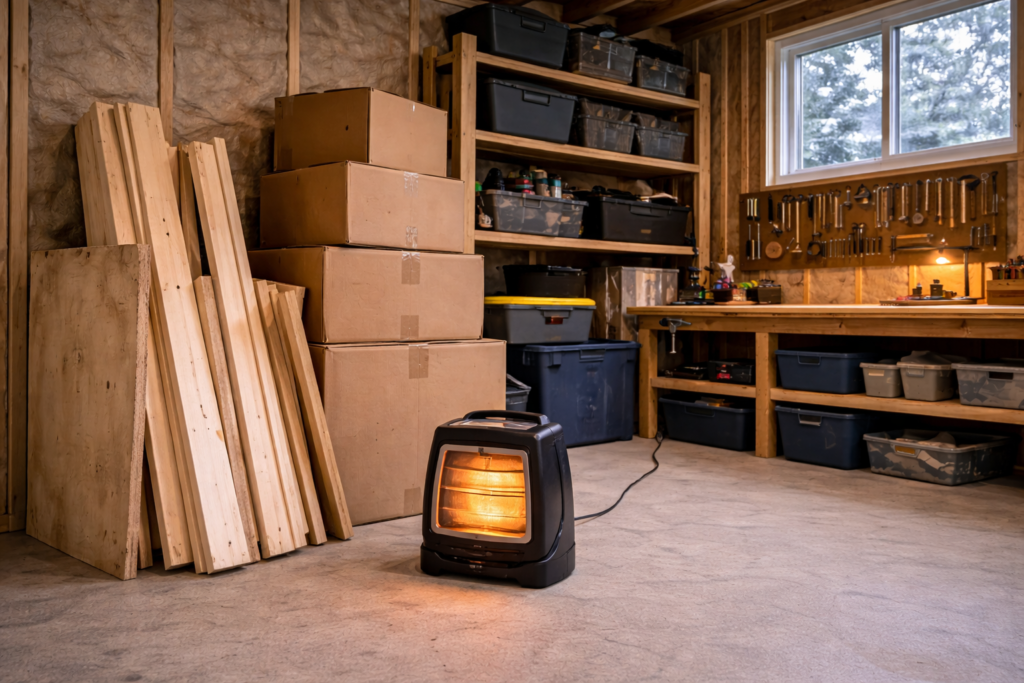
Heating a shed is straightforward when the heater is properly sized and installed. Most problems happen because of simple planning mistakes.
This guide explains the most common shed heating mistakes and how to avoid them.
Choosing a Heater That Is Too Small
One of the most common mistakes is underestimating the required wattage.
If the heater is too small:
-
The shed never reaches a comfortable temperature
-
The unit runs continuously
-
Electricity costs increase
-
Components wear out faster
Always calculate square footage first.
If you have not done this yet, see What Size Electric Heater Do I Need for a Shed?
Ignoring Insulation
Many people install a heater without considering insulation.
An uninsulated shed:
-
Loses heat quickly
-
Requires higher wattage
-
Costs more to operate
Even basic insulation improvements can reduce heating demands.
If your shed is not insulated, review Best Electric Heater for an Uninsulated Shed.
Using the Wrong Voltage
Installing a 120V heater in a large shed often leads to poor performance.
120V heaters typically max out at 1,500 watts, which may not be enough for sheds over 150 sq ft.
In larger spaces, stepping up to 240V is usually more effective.
See Best 240V Electric Heater for a Shed if you need higher output.
Overloading Electrical Circuits
Plugging a heater into a shared circuit with power tools or lighting can cause:
-
Breaker trips
-
Voltage drops
-
Overheated wiring
Avoid extension cords and confirm the circuit rating before installation.
If you are unsure, read Do You Need a Dedicated Circuit for a Shed Heater?
Poor Heater Placement
Incorrect placement reduces efficiency and increases risk.
Avoid:
-
Blocking airflow
-
Placing portable heaters under benches
-
Mounting heaters too close to stored materials
-
Directing heat into a wall or corner
Wall or ceiling-mounted units often provide better airflow distribution.
Choosing More Wattage Than Necessary
Oversizing can also be a mistake.
While slightly higher wattage improves warm-up time, excessive output can:
-
Waste energy
-
Increase upfront cost
-
Create uneven heating
Follow proper sizing guidelines.
For calculation help, see How Many Watts to Heat a Shed?
Ignoring Safety Features
Always look for:
-
Overheat protection
-
Thermostat control
-
Enclosed heating elements
-
Tip-over protection (portable units)
Safety features reduce risk in sheds where wood and stored materials are present.
For safety guidance, review Is It Safe to Run an Electric Heater in a Shed?
Final Thoughts
Most shed heating problems come from:
-
Incorrect sizing
-
Ignoring insulation
-
Electrical overload
-
Poor placement
Avoid these mistakes and your heater will operate more efficiently, safely, and economically.
For a complete overview of heater types and installation options, see Best Electric Heater for a Shed (Complete Buyer Guide).