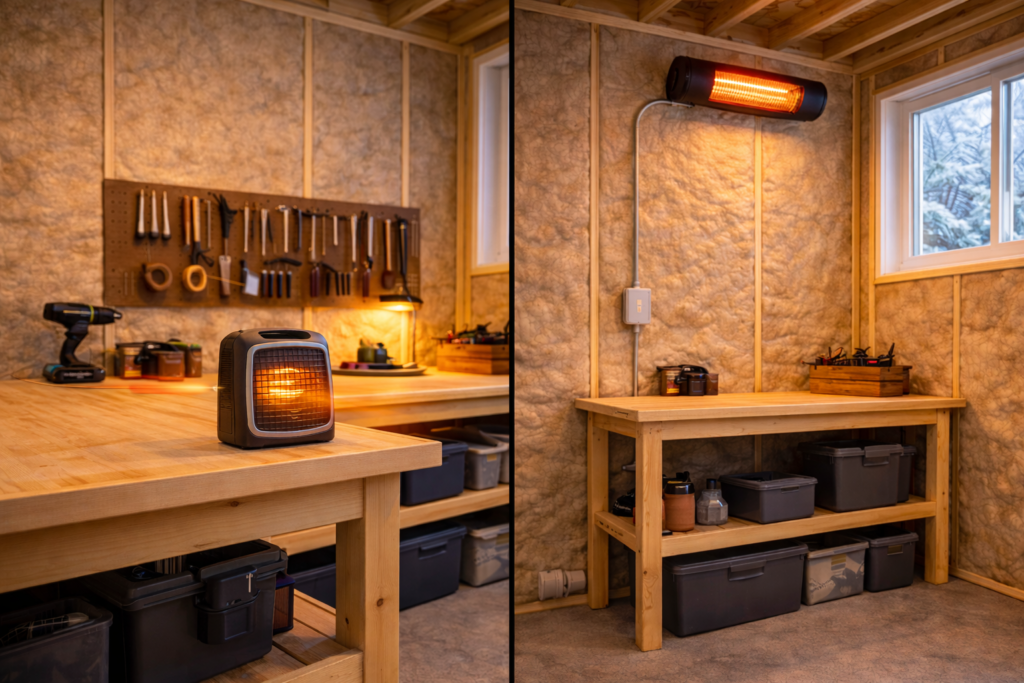
Ceramic and infrared heaters are two common electric heating options. While both run on electricity, they heat a shed in different ways.
This guide explains how ceramic and infrared heaters compare and which one is better suited to shed environments.
How Ceramic Heaters Work
Ceramic heaters use an electric heating element combined with a fan to blow warm air into the space.
They:
-
Heat air quickly
-
Distribute warmth evenly
-
Respond quickly to thermostat changes
-
Often come in compact portable designs
Ceramic heaters are commonly used in small sheds and hobby spaces.
If you have not calculated required wattage, see How Many Watts to Heat a Shed?
How Infrared Heaters Work
Infrared heaters use radiant heat to warm objects and surfaces directly rather than heating the air first.
They:
-
Produce directional heat
-
Operate without strong airflow
-
Warm people and objects quickly
-
Do not rely heavily on fans
Infrared heaters are often used in garages and workshop-style sheds.
Performance in Small Sheds
In small insulated sheds under 120 sq ft:
-
Ceramic heaters warm the air evenly
-
Infrared heaters warm you directly
If you want overall room warmth, ceramic heaters are typically more effective.
For compact setups, see Best Portable Electric Heater for a Shed
Performance in Workshops
In workshop sheds:
-
Air movement helps reduce cold spots
-
Tools and surfaces benefit from steady heat
Ceramic fan heaters often perform better for evenly heating the space.
For permanent installation, see Best Wall Mounted Electric Heater for a Shed
Insulation Matters
In insulated sheds:
-
Both ceramic and infrared heaters can perform well
In uninsulated sheds:
-
Heat loss is faster
-
Ceramic heaters may need higher wattage
-
Infrared heaters provide focused warmth but may not heat the whole space
If insulation is limited, review Best Electric Heater for an Uninsulated Shed
Noise and Airflow
Ceramic heaters:
-
Use a fan
-
Produce some airflow noise
Infrared heaters:
-
Often quieter
-
Do not circulate air as strongly
If noise is important, see Best Quiet Electric Heater for a Shed
Which Is Better for a Shed?
Ceramic heaters are better for:
-
Even room heating
-
Small to medium sheds
-
Workshops requiring airflow
Infrared heaters are better for:
-
Spot heating
-
Standing work areas
-
Quick directional warmth
For a full overview of electric shed heater options, see Best Electric Heater for a Shed (Complete Buyer Guide)
Final Thoughts
Ceramic heaters warm the air and distribute heat evenly.
Infrared heaters warm objects and people directly.
For most shed environments — especially workshops — ceramic fan heaters provide more consistent overall heating.